Stark–Frey alliance
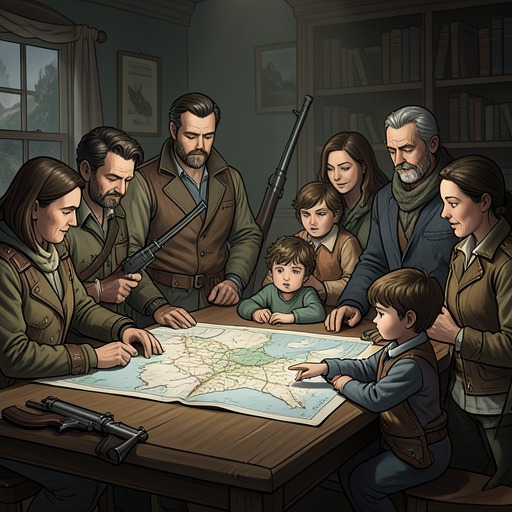
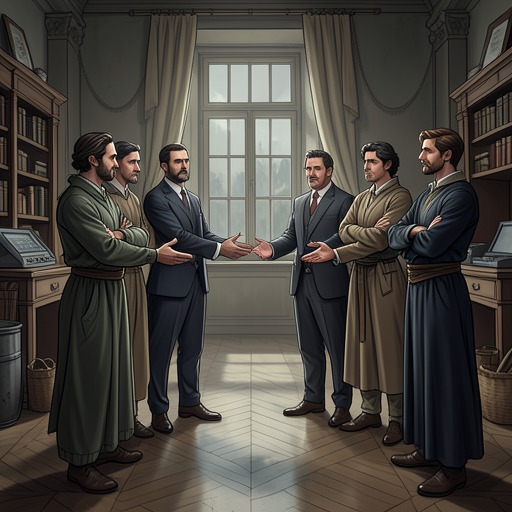
A Clash of KingsThe Stark–Frey alliance is a conditional political and military compact formed during the War of the Five Kings. Robb Stark wins the support of House Frey by agreeing to a future marriage with one of Lord Walder Frey’s daughters or granddaughters, turning a family betrothal into the price of passage, troops, and continued allegiance. The arrangement strengthens the Stark cause while binding Robb’s personal future to the calculations of an old, powerful, and notoriously self-interested lord.
Origins and Terms
House Frey is wealthy, numerous, and sworn to House Tully, with its power centered on the Twins and the crossing of the Green Fork. Its allegiance has never been presented as instinctively reliable. When Robert Baratheon fought Rhaegar Targaryen on the Trident, the Freys arrived only after the battle had ended, earning Walder Frey the enduring title of the Late Lord Frey from Hoster Tully. In the present war, Walder does not commit himself to Robb Stark until Robb promises to marry one of his daughters or granddaughters after the fighting is over.
The bargain therefore rests on an exchange rather than simple fealty. House Frey supplies swords to the King in the North, while Robb supplies the prospect of a royal marriage and the elevated status that such a connection would bring. The scale of Walder Frey’s household makes the obligation especially difficult to treat as symbolic: he is ninety-one years old, has recently taken an eighth wife seventy years younger than himself, and is said to be capable of raising an army out of his breeches. His family is both a political resource and a dense network of competing heirs, brides, and alliances.
The genealogical record makes the marriage promise concrete rather than abstract. Elmar, a nine-year-old Frey boy, is listed as betrothed to Arya Stark, showing that the Stark connection is already being extended across the next generation. This detail places the alliance within the broader dynastic practice of using children and marriage contracts to secure military and political relationships.
Robb Stark and the Frey Obligation
The alliance also shapes Robb Stark’s treatment of Ser Cleos Frey. Robb makes clear that Ser Cleos has not been freed merely because he is being sent as a messenger to Cersei Lannister in King’s Landing. Robb distinguishes between Cleos’s Frey blood and his chosen allegiance: because Cleos fought beneath the lion banner, Robb says that he is a Lannister, not a Frey. Cleos is released only under conditions. He must travel under a peace banner with thirty of Robb’s best men, deliver Robb’s message to Cersei Lannister, return with the queen’s reply, and resume his captivity.
The oath is publicly witnessed. Ser Edmure Tully warns Cleos that every man in the hall has heard his vow and that failure to return will make him forsworn throughout the realm. The episode reveals how the Frey connection works in practice: kinship alone does not guarantee trust, and a sworn promise must be reinforced by public reputation, hostage-taking, and the threat of dishonor. The alliance is thus simultaneously familial and coercive, with political loyalty measured through visible acts of compliance.
Catelyn Stark’s Strategic Role
Catelyn Stark understands that the marriage arrangement remains an active obligation even while the war continues. Robb asks her to go to the Twins with Theon Greyjoy, who is to help escort captives to Seagard before sailing for the Iron Islands. Catelyn could find a ship and return to Winterfell within a moon’s turn if the winds were favorable, where Bran Stark and Rickon Stark need her. Robb presents the journey as a way for her to become acquainted with Lord Frey’s daughters and help him choose his bride once the war is over.
Catelyn recognizes the emotional implication beneath the practical request. Robb is a king, yet he is also her son, and his request suggests that he wants her away from the immediate center of command because her counsel has become difficult for him to hear. She refuses to leave, choosing instead to remain at Riverrun with her dying father, Hoster Tully. The exchange places the alliance between two competing obligations: Robb must satisfy Walder Frey, while Catelyn must care for her dying father and protect the interests of her scattered children. Her role is not that of a passive matchmaker; she is a political actor being asked to help convert a military bargain into a marriage that will preserve the Stark position.
Competing Claims and the Fragility of Fealty
The Frey bargain exists within a wider political world in which every king defines legitimacy differently. Stannis Baratheon proclaims that the Iron Throne is his by birth and blood, declaring that Joffrey Baratheon, Tommen Baratheon, and Myrcella Baratheon are products of incest between Cersei Lannister and Jaime Lannister. Renly Baratheon rejects the idea that inherited right alone determines rule, arguing that Robert Baratheon won the throne with his warhammer and that his own claim is therefore equally practical. He offers to confirm Robb in all his lands, titles, and honors if Robb bends the knee, even allowing him to continue calling himself King in the North so long as he gives fealty, loyalty, and service.
Robb’s alliance with House Frey reflects this same tension between principle and power. His kingship depends not only on a title but on the continued cooperation of houses that control roads, crossings, soldiers, and supplies. Catelyn attempts to mediate between Stannis and Renly because both share a common foe, yet Stannis insists that everyone who denies his right is an enemy, while Renly answers that almost no one wants Stannis as king. Their dispute shows why Robb’s own alliance must be maintained through tangible commitments: in a realm where claims are proclaimed, contested, and enforced by armies, a marriage promise is a form of political infrastructure.
War, Public Power, and the Alliance’s Meaning
The military world surrounding the pact demonstrates the pressures that make such arrangements necessary. Stannis Baratheon’s army surrounds Storm’s End, a castle whose legendary resistance to storms mirrors the endurance expected of great houses and their oaths. Elsewhere, Edmure Tully prepares to defend Tully lands against Tywin Lannister, while Catelyn warns that an open battle could bring the Riverlands everything to lose and little to gain. Robb’s position likewise depends on coordinating warfare, captives, diplomacy, and dynastic promises rather than relying on battlefield success alone.
The contrast between noble banners and popular unrest further undercuts the idea that titles automatically command loyalty. In King’s Landing, a crowd denounces Joffrey Baratheon, Cersei Lannister, and Tyrion Lannister, then turns from the rival kings to demand bread. The chant of “Bread” overwhelms the competing claims of Joffrey, Robb, Stannis, and Renly. Political legitimacy is shown to depend on what people believe, fear, or need, not merely on bloodline or heraldry. Against that background, the Stark–Frey alliance appears both practical and precarious: House Frey can provide men, but its support is tied to the satisfaction of a private dynastic demand.
The war’s material scale also gives the bargain a logistical dimension. Stannis’s fleet is organized into ten lines of twenty ships, but storms, wrecks, and delay weaken the assault before it reaches King’s Landing. When the chain across the Blackwater is raised, galleys crash into it and burn amid red-hot steel, blazing wood, and green wildfire. Such scenes make clear that war is decided by crossings, ships, timing, and prepared defenses as much as by royal declarations. House Frey’s control of a crucial crossing therefore gives its marriage demand real strategic value.
The alliance’s significance is finally sharpened by its contrast with the aftermath of war. After the defense of King’s Landing, Joffrey publicly asks Tywin Lannister to govern the realm until the king comes of age, and Tywin accepts the Hand’s chain in a ceremony that turns military rescue into political authority. The public ritual resembles the Frey arrangement in miniature: service is converted into status, and power is confirmed through an exchange witnessed by the realm. Yet the Frey compact remains more intimate and more dangerous because its price is not an office or ceremony but Robb Stark’s promised marriage. It binds the survival of a kingdom to the fulfillment of a personal oath, making private desire, family honor, and military necessity inseparable.